.svg)
.svg)

.svg)


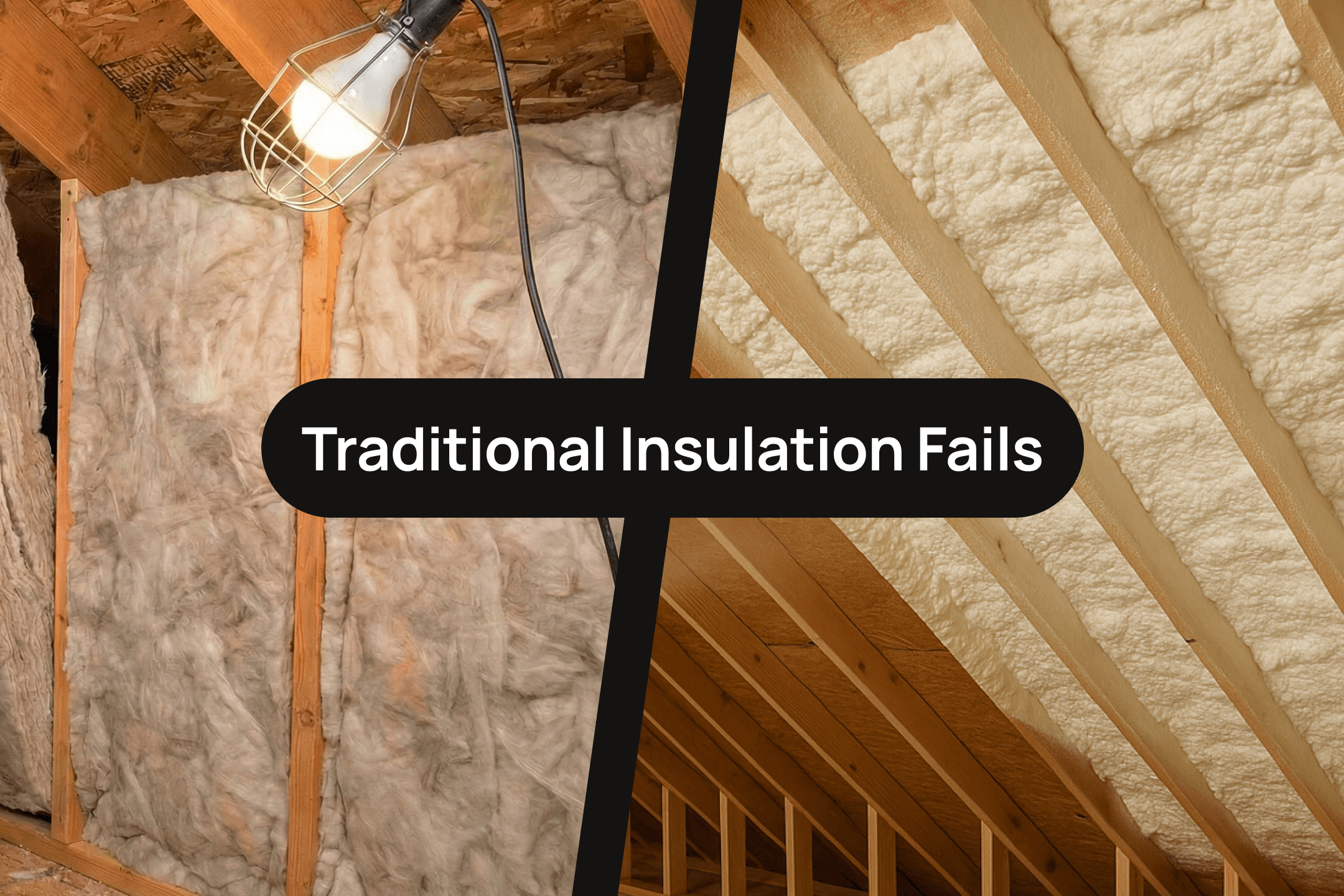


Why Traditional Insulation Fails in Louisiana Humidity
Living in Louisiana means your home is in a constant battle with the air. For homeowners in the Greater New Orleans area and throughout the Northshore, humidity isn't just a weather report—it's a threat to your home's structural health.
While materials like traditional fiberglass insulation are common, they simply weren't built for the Gulf South. To combat our extreme humidity, you need the high-performance spray foam insulation LA climates demand to effectively stop moisture in its tracks.
The Science of Fiber Insulation Failure in the South
Traditional insulation, like fiberglass batts, works by trapping air. In a dry climate, that’s fine. In Louisiana, that air is saturated with water. Because fiberglass is porous, it acts like a filter rather than a barrier.
Humidity Is a Heavy Burden
When humid air enters your walls, it meets the cool air from your AC. This causes condensation—actual liquid water—to form inside your insulation. Once fiberglass gets damp:
- The R-Value Plummets Wet insulation cannot stop heat transfer effectively.
- Gravity Takes Over Damp batts become heavy, sag, and pull away from the studs.
- Energy Bills Spike Your HVAC system has to work twice as hard to pull that moisture back out of the air.
Expert Insight If your existing insulation is already soggy or water-damaged, the first step is a clean slate. Professional vacuum insulation removal is essential to get rid of old, contaminated materials before upgrading your home’s defense.
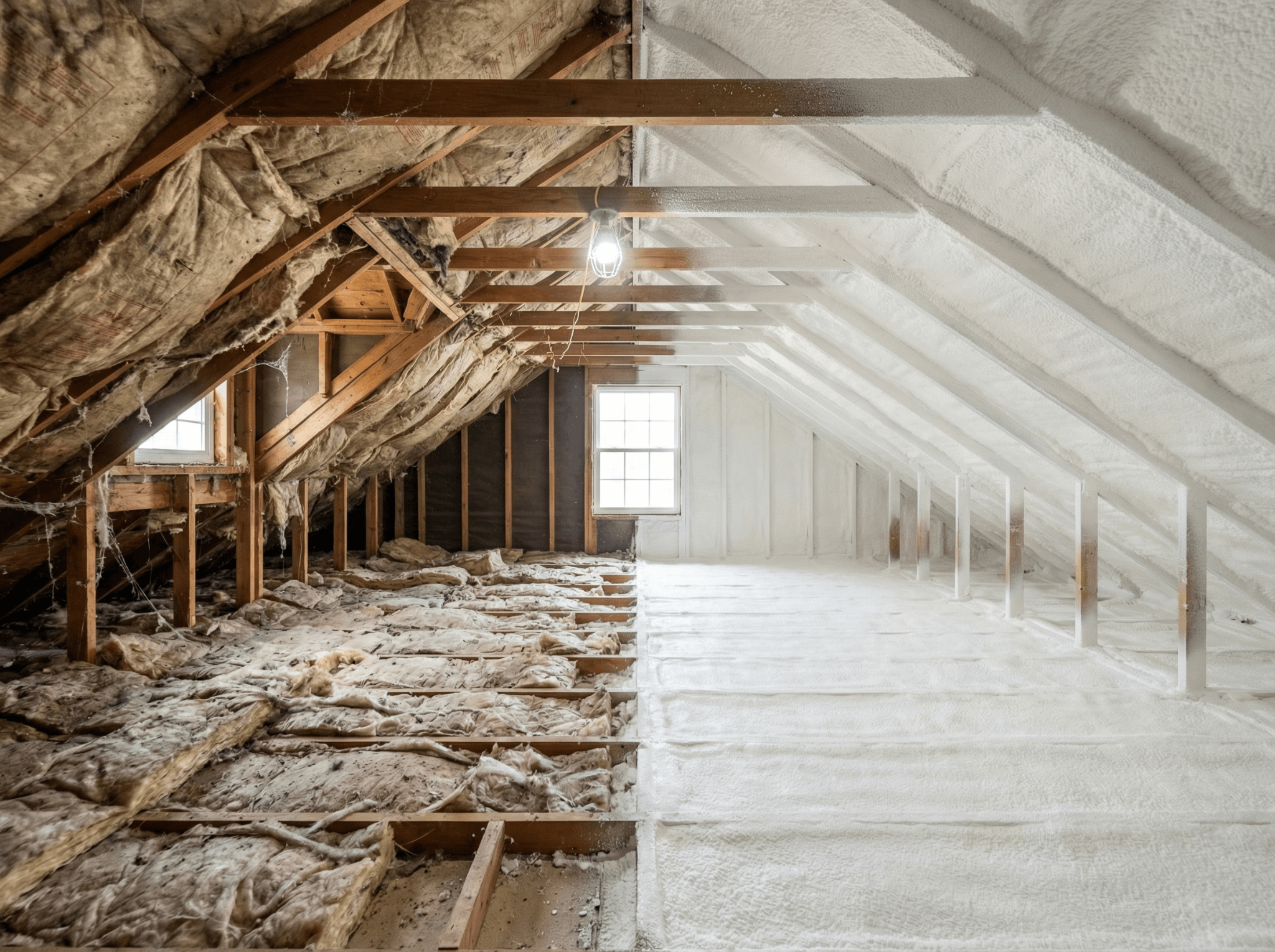
Closed Cell Spray Foam Insulation for Total Moisture Control
Unlike traditional materials, the high-performance spray foam insulation LA residents prefer creates a seamless, impermeable shield against the elements. You generally have two choices depending on your specific needs: open cell spray foam or the even more robust closed cell spray foam insulation.
Building an Internal Shield
When we spray the foam, it expands into every microscopic gap in your wall or roof deck. This creates several layers of protection:
- Water Rejection It does not absorb moisture, so it never gets heavy or sags.
- Vapor Defense It stops the "vapor drive" that pushes humidity into your living space.
Structural Integrity It actually glues your walls together, making the house stronger against wind.
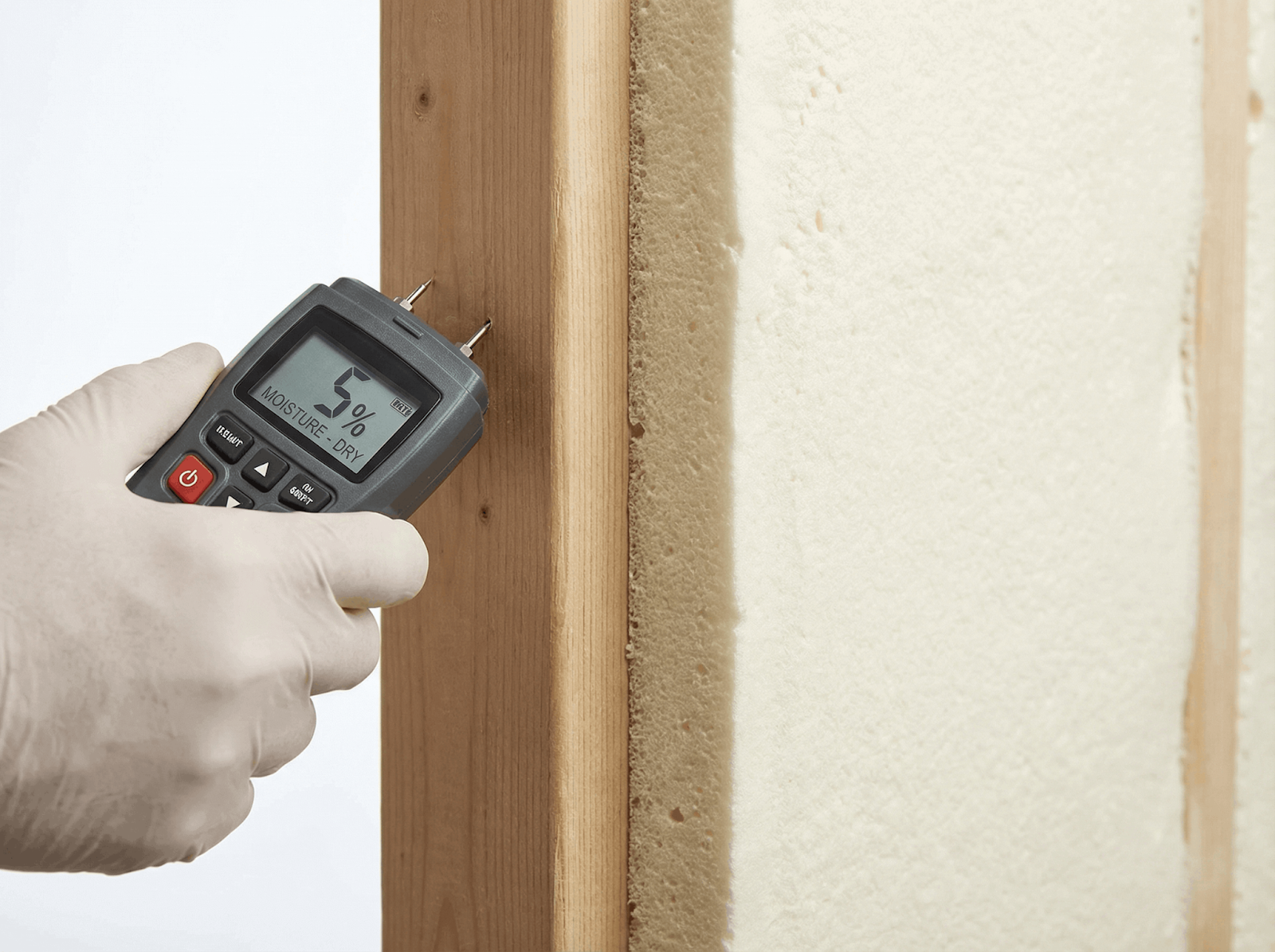
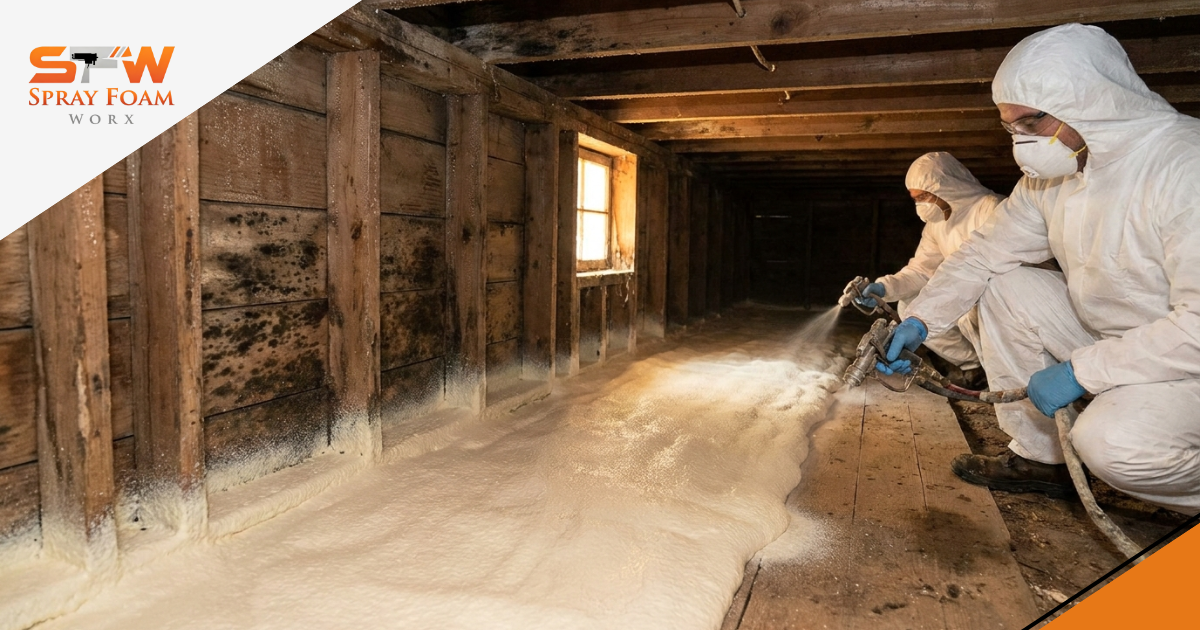
Protecting Your Home With Mold Resistant Attic Insulation
Mold only needs two things to grow: moisture and a food source. Traditional insulation provides the perfect environment because it traps dust (food) and allows humidity (moisture) to linger in the dark.
Why Air Sealing Matters Most
Spray foam insulation LA provides "air sealing," which is the secret weapon against mold. By sealing the cracks where air leaks in, you remove the mold spores' transportation system.
- No Gaps, No Spores It eliminates the airflow that carries allergens into your home.
- Consistent Temperatures It prevents cold spots on walls where condensation likes to hide.
- Cleaner Air It makes your indoor air quality significantly healthier for your family.
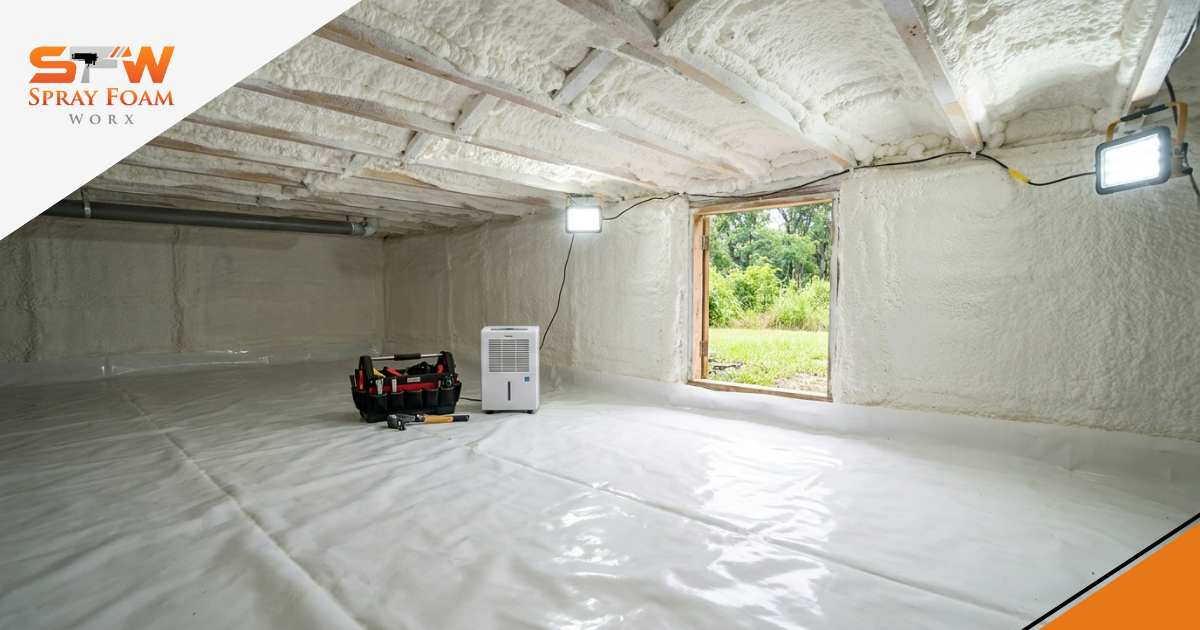
Durable Subfloor Insulation for Raised Houses
Insulation shouldn't be something you have to replace every ten years. When you invest in residential spray foam, you are choosing a permanent fix. While fiberglass settles and degrades, spray foam remains stable for the life of the structure.
Benefits You Can Feel Immediately
- Instant Comfort No more drafty rooms or hot spots near the ceiling.
- Drastic Savings Most homeowners see a 30% to 50% drop in cooling costs.
Quiet Living The density of the foam also acts as a powerful sound barrier against street noise.
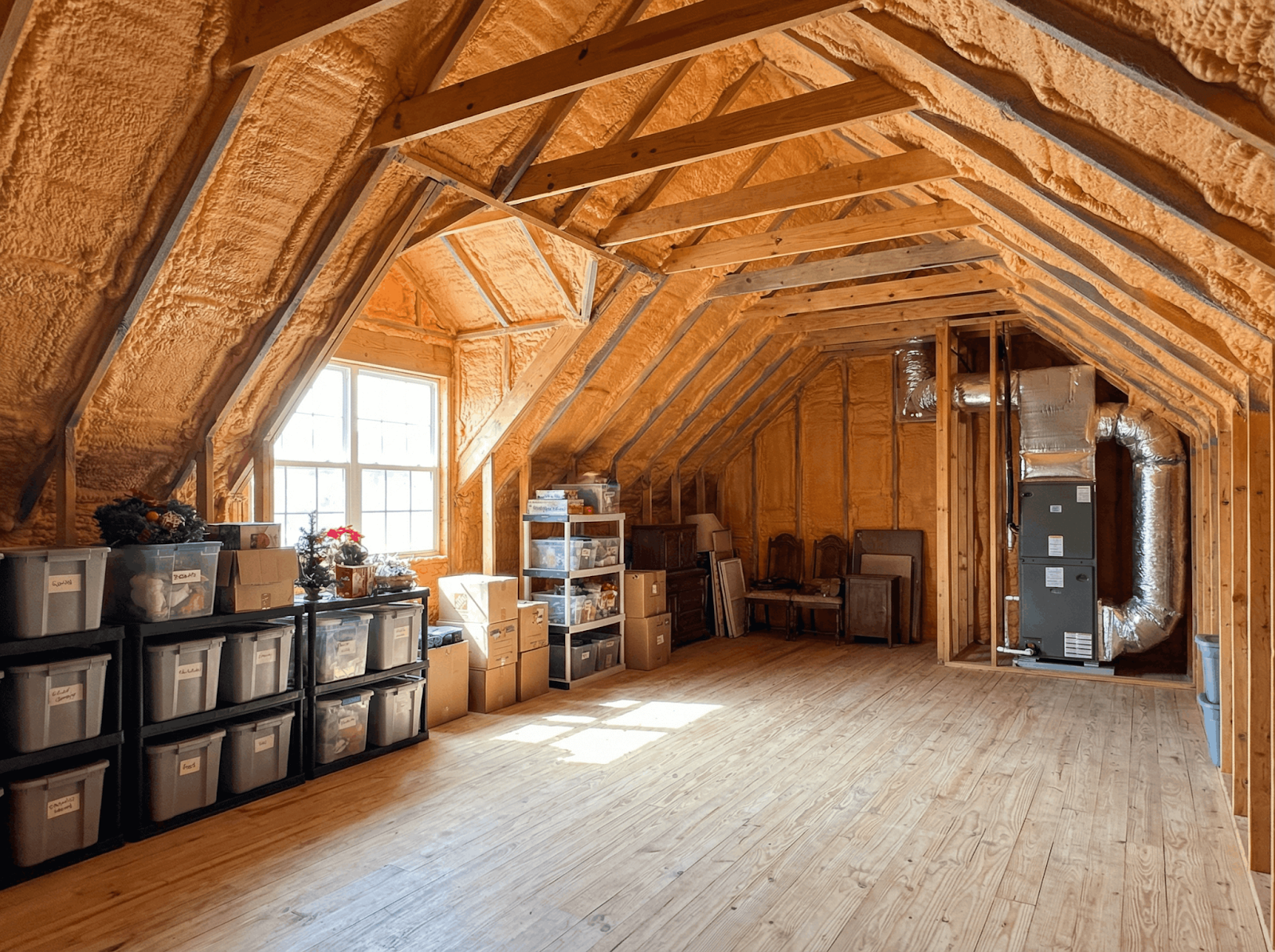
Reach Out to Spray Foam Worx for a Free Quote
Ready to stop fighting the humidity and start enjoying a more comfortable home? Our team specializes in high-performance insulation tailored for the Louisiana climate. Let us help you protect your investment with a solution that actually works.
📞 Call Spray Foam Worx Today (985) 302-3112
FAQs
Q1: Why is spray foam more expensive than fiberglass?
Fiberglass only slows down heat, while spray foam creates an airtight seal that lasts for the life of the home.
Q2: Does the roof pitch really affect the price?
Yes. Steeper roofs require more safety gear and more labor hours, which increases the installation cost.
Q3:How long does it take to see an ROI?
Most homeowners find the system pays for itself in energy savings within 3 to 5 years.
Q4: Is there a downside to spray foam insulation?
The main downside is the initial cost and the fact that it is a permanent installation. It also requires a professional crew to ensure the chemical mix is perfect for a safe, odor-free cure.
Q5: Does expanding foam damage wood?
No. When installed by pros, the foam expands into the empty cavities without putting enough pressure to warp or crack wood studs. It actually adds structural "racking strength" to your walls once it hardens.
Q6: Can spray foam be used in crawl spaces?
Absolutely. Sealing a Louisiana crawl space with spray foam is one of the best ways to stop floor moisture and prevent "cupping" in wood floors.